




Nepal Travel Insurance: What Trekkers Need to Know


Why the policy matters in Nepal
Most trips finish as planned. The awkward day is an ordinary one: a stomach that will not settle, a twisted ankle on a stone step, or a domestic flight that waits for the cloud to lift. In Kathmandu and Pokhara you can find a hospital. Higher up, care is limited.
The U.S. State Department says Nepal does not pay medical bills for foreign visitors, that hospitals often ask for payment before treatment, and that you should carry insurance which includes medical evacuation. The UK Foreign Office gives the same warning for treatment, repatriation, and a helicopter if you need one. A weekend policy from home may not say any of that.
- Illness or injury in a place where the bill comes first
- Altitude illness, which a city policy may exclude
- A weather delay on a short mountain flight
- A bag that misses the connection, or gear stolen from a lodge
- Evacuation when the road has already ended
Treatment, hospital care, and who you call
Look for treatment in Nepal, not only a refund after you fly home. Ask whether a hospital stay is included, whether the insurer can pay the hospital directly, and what you still have to settle yourself. Some policies call this cashless care. Many do not offer it in the mountains.
You also want an assistance number that answers at night. Save it in the phone and on paper, with the policy number. Email you cannot open on the trail is not a plan.
The same section of the policy should say what happens if you need to get home for treatment you cannot finish in Kathmandu. That journey is separate from a short helicopter hop down the valley. Ask which one is included, and up to what amount.
The altitude written in the policy
This is the line that catches people. A policy can look generous and still stop at 3,000 or 4,000 metres, or treat a trek as a sport it does not cover. Above that line the claim can be refused even if the illness itself would have been paid.
Match the number to the highest place you will stand, not the name on the brochure.
- Everest Base Camp is about 5,364 metres, and the usual walk goes higher still at Kala Patthar
- Annapurna Base Camp is about 4,130 metres
- Langtang and Mardi Himal are shorter, and still high enough that a city policy may stop
- The Manaslu Circuit crosses a pass above 5,000 metres
If the document does not name a height, ask the insurer in writing. “Adventure activities” is not an answer. Climbing a trekking peak, or using a rope, is often a different policy again.
Acute mountain sickness is common on these walks. It is not automatically covered just because you bought travel insurance. The CDC Yellow Book describes the illness and says that if symptoms get worse at the same height, going down is urgent. Our own note on how altitude sickness shows up on a Nepal trek is the practical version of that. The policy still has to say the illness is included.
Helicopter evacuation
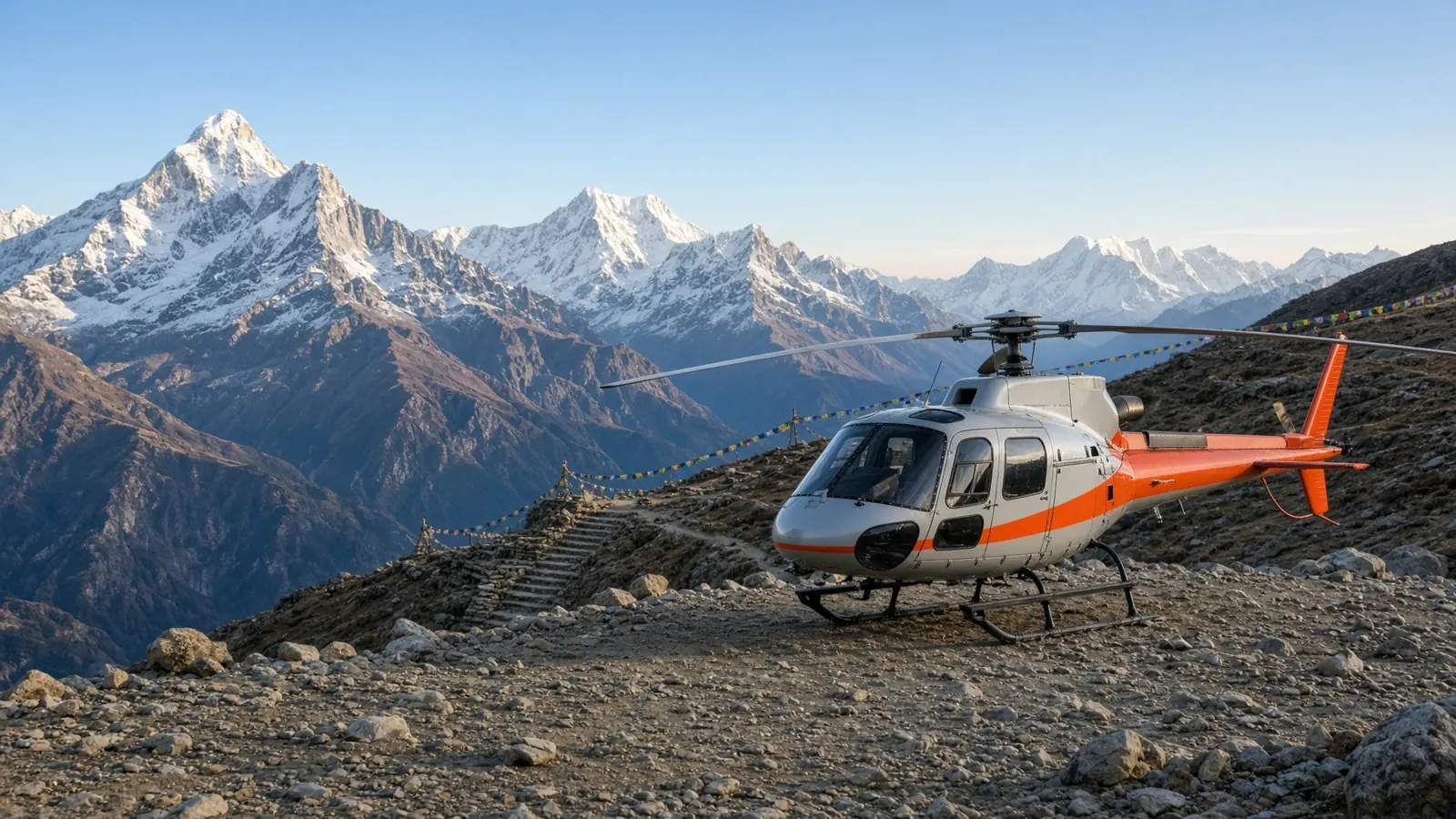
A helicopter is how a sick or injured walker usually leaves a trail once the road has ended. It is not included in every medical policy. Look for the words themselves: helicopter, air ambulance, or mountain rescue, plus the limit and the height.
Payment is not one rule for the whole country. The State Department says operators generally want evacuation insurance, pre-approval from the insurer, or payment up front by card, and that a provider may hold a passport until the bill is settled if there is no approval. Some assistance companies issue that approval directly. Others repay you later, which means someone has to pay first. Ask which of those your policy does before you leave.
Do not delay urgent care in order to reach an insurer. If someone is getting worse, start the rescue. Call the assistance line as soon as you safely can, or have the guide call. The UK Foreign Office also notes that a helicopter may be hard to get quickly in a remote place, and that the cost is usually £1,000 to £2,000 or more per flying hour. That is a government figure for the aircraft time, not a quote for your rescue, and it does not include the hospital.
There is a separate caution. The Foreign Office has warned that a few guides have taken people up too fast and then called an expensive helicopter evacuation. Use a guide you trust, and do not treat a very cheap trek as a bargain if the pace looks wrong.
If someone becomes ill on the trail
- If the person is getting worse, do not wait on hold before asking for help
- Call the assistance number as soon as you can. A guide can call if you cannot
- Give the policy number, the place, the height if you know it, and what is wrong
- Go down if altitude illness is worsening at the same camp. That is the CDC’s advice, and it does not depend on the insurance
- Keep receipts, names, and the time of each call. Photograph the policy and your passport
- Report a delay or a lost bag inside the time the policy states
Flights, missed days, and extra nights
Flights to Lukla and the other short strips leave when the sky allows. A clear plan can become another night in Kathmandu, or a walk that starts a day late. Your trek price and your insurance are different. A policy may pay for a delay, a missed connection, or the extra hotel. It may also exclude weather, or count only the long flight from home and not a domestic flight inside Nepal.
Ask what “delay” means in hours, whether a cancelled mountain flight counts, and whether trip interruption covers leaving early because you are ill. Cancellation cover often applies only to reasons listed in the document, and it often starts from the day you buy, not from the day you booked the trek. Buy once the dates are firm, and ask when the cancellation benefit actually begins. Some insurers still let you start medical cover on the morning you leave home. That is not the same as having cancellation cover for a trip you booked months ago.
Bags, theft, and the things you carry
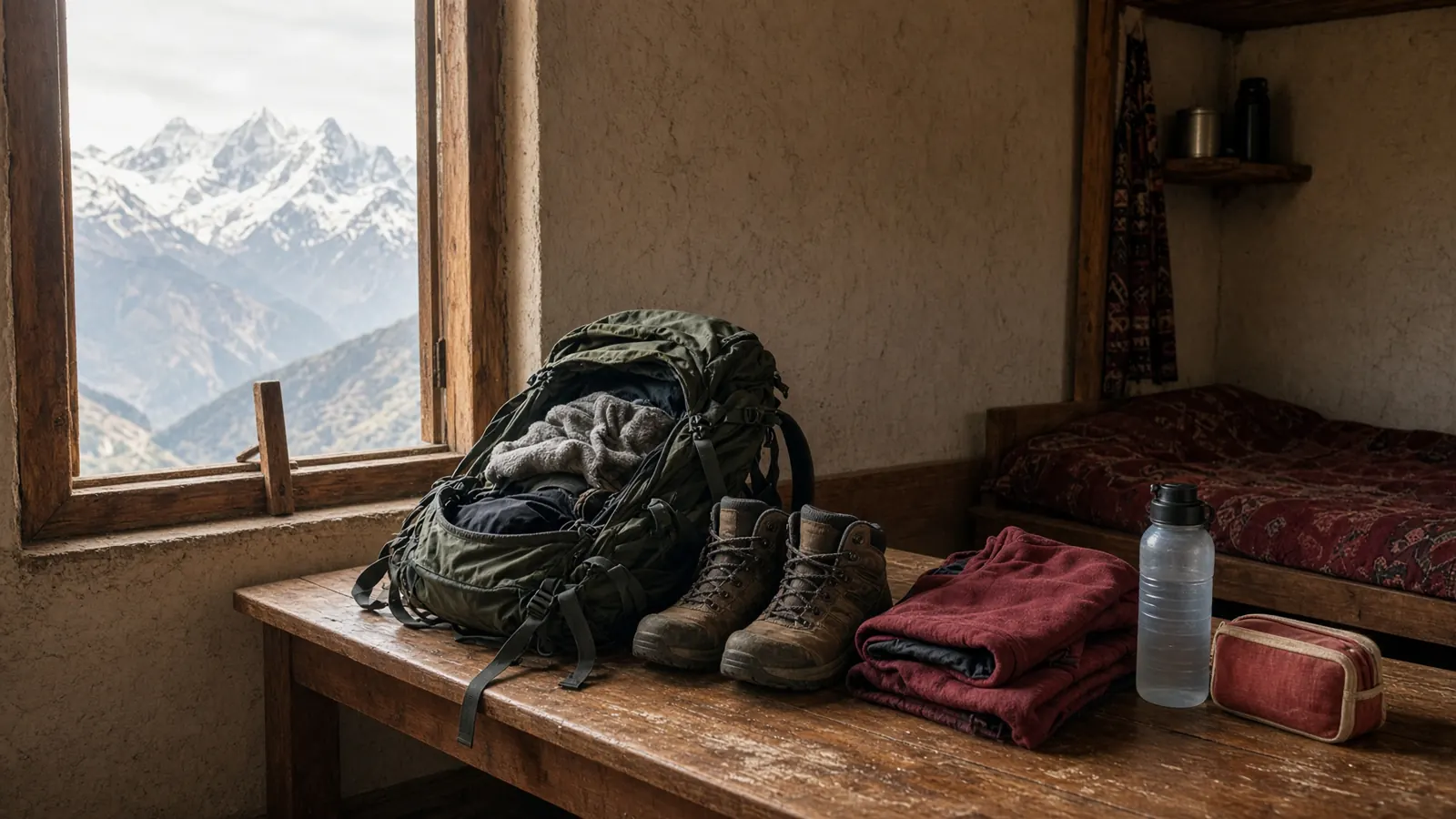
A phone, a camera, a down jacket and boots are painful to replace in a small village. Belongings cover helps, and it is capped, often per item, with a deductible. Receipts make a claim simpler. So does not leaving a pack open in a lodge yard.
A delayed bag is a different claim from a lost one. Ask how many hours must pass, and whether the airline’s own compensation has to be tried first.
What a policy may refuse
Read the exclusions before the price. These are the usual gaps. Yours may differ.
- A height, or a type of trek, that is above the activities you declared
- An illness you already had, if you were asked about it and did not say
- A deductible you pay on every claim
- Care that was not medically necessary, or a rescue arranged with no call to the insurer when a call was possible
- Alcohol, or an activity the document lists as excluded
- A claim with no receipts, no report of a theft, or a delay reported too late
If you have a condition, tell the insurer when they ask. Guessing that it “will not matter” is how a later claim is refused.
Check this before you pay
Buy in the country you live in, after the trek is booked and before you need the cancellation benefit. Read three lines twice: the highest altitude, the list of activities, and the evacuation wording.
- The highest night and the highest viewpoint are both inside the height limit
- Helicopter or mountain rescue is named, with a limit, not assumed
- Treatment in Nepal is included, and you know whether you must pay the hospital first
- The assistance number answers, and you have it on paper
- Cancellation and cutting the trip short match the reasons you actually worry about
- Domestic flights in Nepal are mentioned, if weather delays matter to you
- Bags, theft, and a delayed suitcase each say what they pay, and what they exclude
- You have declared what they asked, including any condition and any climb that is more than a tea-house walk
If you are leaving from Japan
Travellers who live in Japan often buy before the flight. Sompo Japan’s official overseas policy, off!, can be applied for from 45 days before departure until the morning you leave home. That is the insurer’s own rule for when you may buy. It is not a statement that the policy covers a high trek. Read the wording on trekking, altitude, and rescue, on their site, before you pay. Premiums and conditions change.
The same questions are on our Japanese insurance note. If you live somewhere else, use an insurer where you live. The height of the trail does not change with the passport.
A note, and if you want help with the walk
This is general information, not insurance, legal, or medical advice. The policy wording is what decides a claim. Nepal Travel Guide does not sell insurance, does not decide whether you can buy a policy, and does not guarantee that an insurer will pay.
If you are unsure about the days, the height, or which trek fits the time you have, write to us. Say where you want to walk and for how many days. We can help you plan the trip. The insurance decision stays with you and the insurer.